





Xiangni
Wu
MD
PhD
education
Medical School: Zhongshan School of Medicine, Sun Yat-Sen University, Guangzhou, China
Residency: University of Missouri-Kansas City, Kansas City, MO
biography
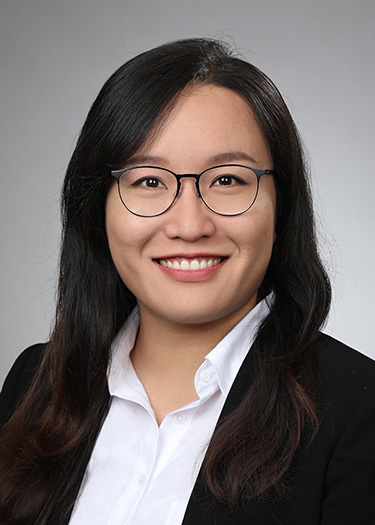
Dr. Wu’s journey to rheumatology began on a deeply personal level when an autoimmune disease affected her family, sparking a lifelong dedication to understanding and restoring immune function. This passion took root during her medical studies at Zhongshan School of Medicine, Sun Yat-sen University in China. She went on to earn her Ph.D. in Immunology from Peking Union Medical College, where she investigated the pathogenesis of systemic lupus erythematosus and published her foundational findings in Science Translational Medicine. Driven to translate this deep mechanistic understanding into therapeutics, she completed a five-year postdoctoral research fellowship in Bone Marrow Transplantation at Stanford University. Her research focused on engineering Chimeric Antigen Receptor Regulatory T-cells to restore self-tolerance in autoimmune diseases—a project that yielded a co-authored patent, publications, and crucial data for a $1.6M NIH R01 grant.
Dr. Wu subsequently completed her internal medicine residency at the University of Missouri-Kansas City. Throughout her training, she distinguished herself as an outstanding clinician, leader, and educator, earning both the Intern of the Year and Resident of the Year awards. Her systemic leadership in the Fellowship Development Initiative, combined with her academic and clinical excellence, culminated in her induction into both the Gold Humanism Honor Society and the Alpha Omega Alpha Honor Medical Society. At graduation, she was further recognized with the Women of Saint Luke’s Excellence in Patient Care Award out of all rotating GME programs.
Outside of medicine, she enjoys cooking, gardening, exploring the local restaurant scene, playing tennis, skiing, and hiking with her family.
Why Rheumatology?
"I was drawn to rheumatology because it represents the perfect intersection of a deep, personal connection to patients, intellectually stimulating clinical puzzles, and the incredible opportunity to use our growing understanding of immunology to make a dramatic, life-changing impact. During my training, I was captivated by the profound stories these diseases tell in the clinic. I remember the powerful lesson of seeing a young, otherwise healthy man with a 'bamboo spine' from ankylosing spondylitis, which demonstrated how a single inflammatory process could reshape a person’s life. I love the deep detective work of the specialty, such as seeing how a diagnosis of dermatomyositis can be the first clue to an underlying malignancy, or how uniquely different patients respond to identical treatments. Ultimately, witnessing a patient with severe vasculitis whose threatened limbs were completely saved by powerful immunologic therapy solidified my commitment. I find it deeply rewarding to use cutting-edge science to restore balance and bring lasting hope to patients managing complex, chronic conditions."
Why UW?
"I chose the University of Washington because it offers an unparalleled alignment between world-class clinical training and an elite translational research ecosystem. UW’s structured physician-scientist pathway and Rheumatology T32 training grant provide the ideal scaffolding, including dedicated protected research time and formal grant-writing mentorship, to successfully transition from a fellow to an independent investigator. The integration among UWMC-Montlake, Harborview, Seattle Children’s, and the Benaroya Research Institute creates a premier environment for human immunology and immune tolerance research, offering direct access to the advanced cores and mentorship necessary to advance next-generation cellular immunotherapies.
Clinically, the program's high-acuity subspecialty experiences and front-loaded breadth of inpatient consults across multiple distinct sites ensure I will grow into the highly competent, versatile rheumatologist I aspire to be. Furthermore, Seattle provides an incredible academic community and the perfect environment for my family, offering professional opportunities for my husband and stability for my son. UW is truly the ideal place for me to bridge the lab and the clinic while growing both personally and professionally."